ANIMATRIX
DIRECTOR: KID'S STORY & A DETECTIVE STORY
HISTORY
MATRIX: How
long have you been
working in anime?
WATANABE-SAN: I
actually started as an Animation Producer, and it’s been about 12 years
since I started directing. I was happy to work in live action or animation, but
heard you could become a Director faster in the animation industry.
MATRIX: Have
you had the opportunity to direct any live action?
WATANABE-SAN: It’s
something I would like to do, but haven’t
had an opportunity
to yet.
MATRIX: What
are some of your previous projects?
WATANABE-SAN: After
joining the Sunrise company, I worked on production and storyboards on anime
productions including Armor Hunter Merowlink and Mobile Suit Gundam 0083: Stardust
Memory. My directorial debut was the video anime Macross Plus, and Cowboy Bebop
was my first TV series as Director. The Cowboy Bebop film is the first feature
I have directed on my own, I’ve co-directed films with other directors,
but that was my first time solitary.
MATRIX: The
opening sequence of the Cowboy Bebop TV episodes has a very stylized, almost
retro, feel.
Do you recall any particular influences?
WATANABE-SAN: It’s
hard for me to identify my influences because I watch so many things and enjoy
so many different things, but I do like, and have watched, a lot of old American
movies. If there is something in my work that hints of influence from a certain
film or something, it may very well be, because it’s something I like and
has just crept down into my work.
MATRIX: What
are the key differences between producing TV episodes and a feature?
WATANABE-SAN: It’s
mostly a question of story structure. With the TV series you always have to keep
in mind that someone will watch it, and next time they see it they’ll want
to have more information. There’s a different dynamic than with a movie,
where your basic target is someone who knows nothing about the story walking
in and getting the whole build up from start to finish in one viewing. With TV
you always have to keep in mind you’re working for TV, it has a fairly
rigid format.
MATRIX: Was
directing a feature of Cowboy Bebop always your intention?
WATANABE-SAN: My
initial desire was to make a movie of Cowboy Bebop, so the whole time I was doing
the TV series, I had that in mind.
MATRIX: How
early was the story for the film conceived?
WATANABE-SAN: When
we were finally presented with the opportunity to make the Cowboy Bebop movie,
that’s when I really started working on the story. I thought of the story
quite a bit later in the process, but while I was still making the TV series
I did have the villain in mind, the character Vincent you see in the Cowboy Bebop
film.
MATRIX: I
read somewhere that Vincent is the dark side of yourself; is there any truth
to that?
WATANABE-SAN: Sometimes
it’s just stuff that comes to mind, other times my characters are based
on my favorite musicians or favorite live action movie actors. It’s hard
to say when a character is based on something internal or something external.
MATRIX: How
do you work with your lead writer Keiko Nobumoto?
WATANABE-SAN: Our
roles are not sharply defined at all. Rather than her coming in with a story
and me just directing, we will both — while we’re discussing different
ideas — come up with a story. Even when the story is in my direction, I’m
often working in collaboration with her.
MATRIX: Are
there any other collaborators on the Cowboy Bebop project who have been extremely
influential?
WATANABE-SAN: The
biggest one is Yoko Kanno the composer. She and her music are an essential part
of Cowboy Bebop. For example, sometimes there are scenes I haven’t intended
music to be put with, and she comes in with music that’s perfect for them.
Sometimes she comes in with music that’s meant for one scene and I end
up using it for a totally different part. A lot of times she’ll come in
with a ton of ideas and I’ll end up using those in all sorts of ways she
didn’t necessarily envision.
MATRIX: What
is censorship like in Japan, did it affect Cowboy Bebop at all?
WATANABE-SAN: Censorship
is definitely more of a concern when you’re making television, because
television has some fairly strict laws about what you can show and what
you can’t show. It hasn’t been a concern at all for me in the making
of my movie. Regardless, there are enough people like Producers, and so on, who
get to look at my storyboards when I’m working on them, so I get a fairly
good idea. It’s sort of been up to me, especially on the TV series, to
police myself.
MATRIX: Do
you feel the pressure to police yourself?
WATANABE-SAN: By
the TV rules it’s not really responsible to make something that can’t
be shown. I feel that that’s one of my roles as Director, as I’m
making the judgements myself.
MATRIX: Is
this the end of Cowboy Bebop?
WATANABE-SAN: The
thing I’m thinking about next is something totally original.
THE
ANIMATRIX

MATRIX: How
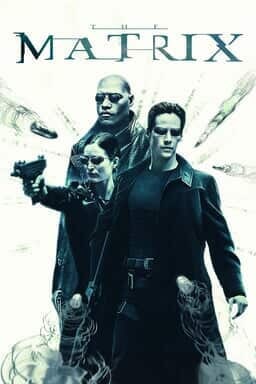
did you get involved with the ANIMATRIX?
WATANABE-SAN: Even
before anyone had heard of THE MATRIX, or before it was being made, I was a big
fan of Andy and Larry’s first film, Bound. When I heard that the same people
were making a film called THE MATRIX I was very excited and looked forward to
seeing it. It just happened that I got invited to a pre-release screening of
THE MATRIX, and it blew me away. So when I heard that there was an animation
project going forward in Japan related to THE MATRIX, I stepped forward and tried
to get in touch with the people who were producing it.
I actually happened to be on an international flight once, a flight from the
United States to Japan — this was before THE MATRIX was released in Japan but
it had already been released in the United States — and they just happened to
be showing THE MATRIX on the airplane. After watching the first few minutes of
it, I realized that an airplane was no place to view it and took off my earphones
and reserved myself to hold on and wait till I could see it in Japan, just because
the picture and the sound were so bad in the airplane. Although, every now and
then I had to look up at the picture, I couldn’t resist.
MATRIX: What
has been the process since you got in touch with the ANIMATRIX Producers?
WATANABE-SAN: When
I was first approached, when we first started talking about doing an episode
of Animatrix, there was an option of doing either a story of my invention or
an episode called KID’S STORY, which is one of Andy and Larry’s stories.
It is very tightly bound up with the MATRIX movies, and actually introduces a
character who appears in THE MATRIX sequels.
At first I was leaning very heavily towards doing an original story, but the
reason I ended up going with the KID’S STORY is because it is one of Andy
and Larry’s stories, and obviously very close to their hearts. It has echoes
of THE MATRIX 2 and THE MATRIX 3, which is kind of exciting. After talking to
the Producers and Andy and Larry Wachowski, I realized it would be okay to add
some of my own ideas to their original story line, rather than just executing
their piece, so I felt I had enough ideas that I could make something personal
of this project.
MATRIX: You
visited the filming in Australia. What was that like?
WATANABE-SAN: I
had finished my storyboards, so I came to Australia to show them to Andy and
Larry and get their feedback, and also to discuss if there were any changes needed.
Things like that that have to be done face to face.
Visiting the different sets I got a very good taste for the kind of production
it is, just from going around to the sets and the various departments, and seeing
what people are doing. When I lay down in one of the chairs in the Neb, I really
felt like I was inhabiting the world of THE MATRIX, so there is a certain feeling
that I’m part of this larger project, part of a larger world.
MATRIX: How
has it been working with Larry and Andy?
WATANABE-SAN: First
of all, I’m extremely honored to be part of this project. One thing that’s
interesting about it is that even though we’re using two different mediums
—
live
action film and cel animation — and working in two totally different countries
and cultures, I really feel we have something in common. Especially after seeing
Andy and Larry’s films, and comparing those with the work I’ve been
doing. I feel that there’s really something, that maybe we share very
similar viewpoints.
KID'S
STORY

MATRIX: You
have spent some time filming Clayton Watson who is the Kid in the film; how
important is it to have Clayton act and react like the Kid in the anime?
WATANABE-SAN: It’s
important to make it obvious that it’s the same character, so I have taken
a lot of reference videos of the Kid, trying to observe his mannerisms and nuances.
On the other hand, if you just take live action and draw it, it doesn’t
make for particularly interesting animation. It’s definitely important
to make the Kid recognizable, that’s my job as an Animation Director, but
it’s not just drawing real life. There’s a certain style of acting
you can only get away with in animation, and that in fact you need for animation,
because it’s just a very simple picture.
There are sides to the Kid that you will only see in the KID’S STORY animation.
One thing is the whole skateboarding aspect, which is something you’ll
never see in the movie, but it’s a side of the Kid, and that’s what
makes the big action scene in KID’S STORY. So there are things like that
where I’ve taken what I know about the character and gone way off, using
what I know as a point of departure.
MATRIX: Is using ‘real world’ reference
a typical thing when producing an anime?
We don’t usually use reference footage at all. However, having this opportunity
and because I’m doing a character that’s based on a real character,
one thing we can get from these reference videos is that we can study the actions
and reactions, in animation we call them secondary actions. What that basically
is, is the sort of subconscious movements people do when they are being themselves,
like biting their nails. They are things that, if you try and imitate them, you’ll
just get further and further away from a real performance. It helps if you can
do some very complicated things, like when a character is talking, instead of
just having them talking, they’re rubbing their hands or scratching their
head or hunching up.
MATRIX: Directors
on a live set will sometimes block out a shot with their hands, or use
digital video to test a shot.
How do you think about framing?
It’s all done in my head. I draw the storyboard, and when we start doing
the animation layout, which is the next step after storyboarding, I’ll
often change things around at that point. I don’t do any live action
or through the lens testing.
MATRIX: In
that case, how do you get that information across? How elaborate are your drawings
and how do they get to the next step?
WATANABE-SAN: For
me, it’s just a matter of drawing these little sketches that make up the
first version of the storyboards, based on what I have in my head. I have written
a treatment, but that was just to communicate the story to people before they
saw the storyboards. Actually writing things down isn’t really part of
my process; it’s more just going straight from my head to storyboard.
MATRIX: Thank
you Watanabe-san.
Interview by REDPILL
Translated by Mike Arias
November 2001
NOTE: After this
interview, Watanabe-san was invited to do another ANIMATRIX episode, DETECTIVE
STORY.
|